Among all adherent cell culture vessels, the T75 flask remains one of the most widely used formats in research laboratories and early-stage bioprocessing. Despite the availability of larger flasks and automated systems, T75 flasks continue to be a standard Cell Culture Flask choice for scientists working with mammalian cells.
But why does the T75 flask maintain such strong and consistent demand? And what makes it a preferred Cell Flask across so many applications?
What Is a T75 Flask?
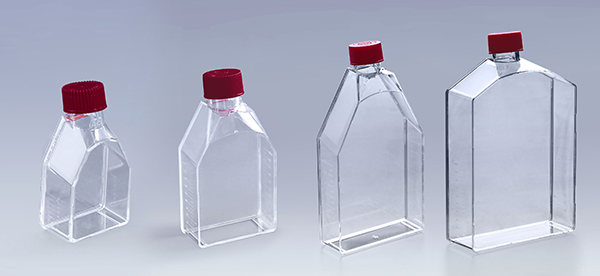
A T75 flask is a cell culture flask with approximately 75 cm² of growth surface area, designed primarily for adherent cell lines. It represents a balance between small-scale control and moderate expansion capacity.
Typical characteristics of a T75 Cell Culture Flask include:
Growth area: ~75 cm²
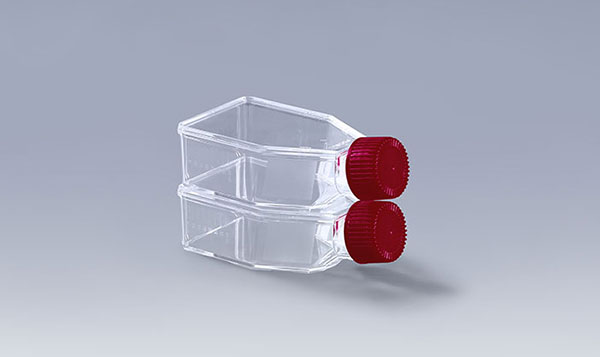
Working volume: typically 15–30 mL
TC-treated surface for adherent cells
Compatibility with standard CO₂ incubators
This size makes the T75 flask suitable for both routine cell maintenance and experimental workflows requiring reliable cell numbers.
Why T75 Flasks Are Widely Used in Adherent Cell Culture
A Balance Between Control and Yield
Compared with smaller formats such as T25 flasks, T75 flasks allow researchers to expand adherent cells without excessive passaging. At the same time, they offer more experimental control than larger flasks, making them ideal for:
Routine cell expansion
Assay preparation
Transient expression studies
Early-stage process development
This balance is one of the key reasons T75 remains a foundational Cell Flask format.
Compatibility with Common Cell Lines
T75 flasks are frequently used for a wide range of adherent mammalian cells, including:
HEK293 and HEK293-derived lines
CHO (adherent or early adaptation stages)
Vero cells
Fibroblasts and epithelial cells
For many laboratories, the T75 Cell Culture Flask serves as the default vessel during early experimentation before scale-up.
Recommended Medium Volumes for Cell Culture Flasks
T75 Flask vs Other Cell Culture Flask Sizes
Understanding why T75 flasks are so popular also requires comparing them with other common formats.
T25 flask offer high control and low reagent consumption, but limited yield
T75 flask provide sufficient surface area while maintaining ease of handling
T175 and T225 flasks support higher cell numbers but require greater media volume and handling effort
For many workflows, the T75 flask represents the most efficient compromise between scalability and operational simplicity.
Common Applications of T75 Cell Culture Flasks
Routine Cell Maintenance
T75 flasks are widely used for maintaining healthy adherent cultures, allowing stable growth without frequent splitting.
Transient Transfection
In transient expression workflows, T75 Cell Flasks provide enough surface area to generate meaningful protein or viral yields while maintaining reproducibility across experiments.
Viral Vector Seed Preparation
For HEK293-based viral vector production, T75 flasks are often used during early expansion and seed preparation before moving to larger culture systems.
Why Quality Matters in T75 Flask
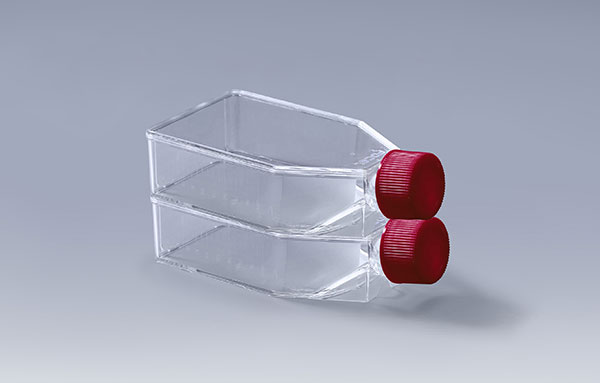
Although T75 flasks may appear interchangeable, Cell Flask quality can significantly impact experimental outcomes. Key quality factors include:
Uniform TC-treated surface for consistent cell attachment
Reliable sterility assurance
Batch-to-batch consistency
Optical clarity for microscopic observation
Inconsistent Cell Culture Flasks can introduce variability in cell growth, transfection efficiency, and downstream results.
T75 Flasks in Modern Cell Culture Workflows
Despite advances in automation and large-scale culture platforms, T75 flasks continue to play a critical role in modern laboratories. They remain:
A standard vessel for adherent cell work
A bridge between small-scale testing and larger expansion systems
A trusted format for reproducible results
As a result, the T75 flask continues to be one of the most searched and widely used Cell Culture Flask formats worldwide.
Final Thoughts
The enduring popularity of the T75 flask is not accidental. Its versatility, ease of use, and compatibility with a wide range of adherent cell workflows make it a cornerstone of cell culture operations.
When chosen with appropriate quality standards, a T75 Cell Culture Flask provides a reliable foundation for consistent cell growth, experimental reproducibility, and downstream success.










