In cell culture workflows, researchers often assume that a cell culture flask is a standardized consumable. However, in practice, experimental results can vary significantly when the same cells and protocols are used with cell flasks from different suppliers. These variations may appear subtle at first—changes in attachment efficiency, growth rate, or transfection consistency—but they can directly impact data quality, reproducibility, and downstream outcomes.
Understanding why these differences occur is essential for selecting the right cell culture flask and maintaining experimental reliability.
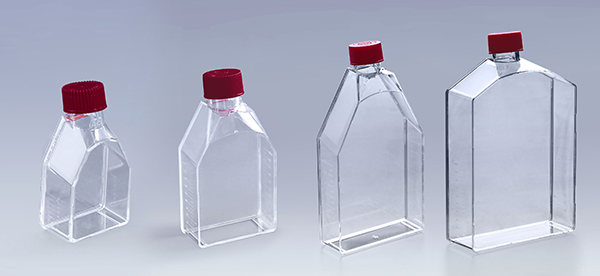
1. Surface Treatment Consistency
One of the most critical factors influencing cell behavior is the surface treatment of a Cell Culture Flask. Although many suppliers label their products as “TC-treated,” the treatment methods and quality control standards can differ.
Variations in surface chemistry affect:
Cell attachment efficiency
Spreading and morphology of adherent cells
Early-stage growth kinetics
Inconsistent surface treatment may lead to uneven cell distribution or delayed attachment, especially for sensitive cell lines. A high-quality cell culture flask should offer uniform surface properties across the entire growth area and from batch to batch.
2. Raw Material Quality and Manufacturing Control
The base material of a Cell Flask—typically polystyrene—plays a crucial role in optical clarity, mechanical stability, and biocompatibility. Differences in resin grade and molding precision can introduce variability between suppliers.
Poor material control may result in:
Microscopic surface defects
Inconsistent wall thickness
Reduced transparency during microscopic observation
Well-controlled manufacturing processes help ensure that each cell culture flask performs consistently, regardless of production scale.
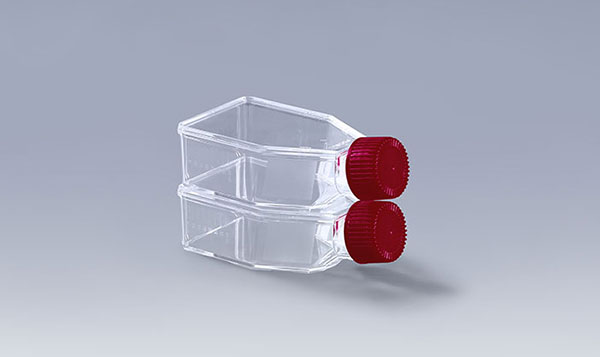
T25 TC-treated Cell Culture Flask
3. Geometry and Growth Area Accuracy
Even small deviations in the internal geometry of a cell flask can influence cell culture performance. Variations in growth area, corner design, or neck angle may affect:
Medium distribution
Gas exchange efficiency
Local cell density
For workflows that rely on precise seeding densities or surface area–based calculations, inaccurate flask geometry can lead to unexpected differences in cell growth and experimental outcomes.
4. Sterility Assurance and Quality Control Standards
Sterility is a baseline requirement, but the depth of quality control behind sterility assurance varies among suppliers. Inadequate validation or weak batch testing increases the risk of contamination or lot-to-lot variability.
Reliable cell culture flasks are typically supported by:
Validated sterilization processes
Lot traceability
Documented quality control procedures
These factors become especially important in long-term culture, viral vector production, or process development workflows.
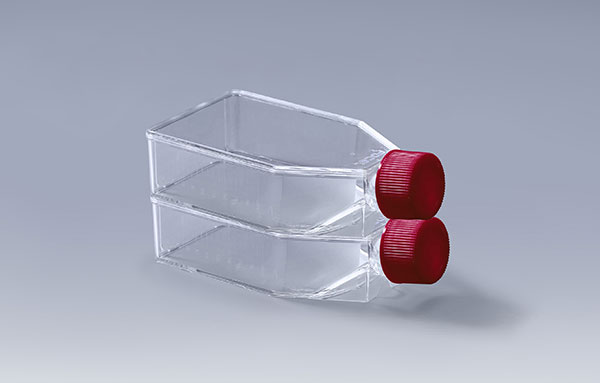
T75 TC-treated Cell Culture Flask
5. Batch-to-Batch Reproducibility
Even when a single flask performs well, inconsistent performance across batches can disrupt experimental continuity. Reproducibility depends on tight control over surface treatment, materials, and manufacturing parameters.
For laboratories running parallel experiments or scaling up from research to development, selecting a cell culture flask with proven batch consistency helps reduce variability and improves confidence in experimental data.
Conclusion
Differences in cell culture results between flasks from different suppliers are rarely accidental. They often stem from variations in surface treatment, raw materials, manufacturing precision, and quality control standards.
Choosing a reliable cell culture flask is not just about matching specifications—it is about ensuring consistency, reproducibility, and long-term experimental stability. By understanding these underlying factors, researchers can make more informed decisions and minimize unexpected variability in their cell culture workflows.










