Roller bottles are widely used for large-scale adherent cell culture in vaccine manufacturing, virus propagation, and biopharmaceutical production. When the culture process is well controlled, cells should attach across the inner surface and gradually form a relatively uniform monolayer.
However, users may sometimes observe dense cell bands, sparse areas, cell clusters, or cells concentrated at one end of the bottle. These patterns indicate that cells were not distributed or attached uniformly during the early culture stage.
Uneven attachment does not always mean that the roller bottle is defective. Rotation settings, equipment condition, inoculum preparation, cell health, medium handling, and surface treatment can all influence the final attachment pattern. Identifying the pattern and when it first appeared is therefore the first step in troubleshooting.
What Does Uneven Cell Attachment Look Like?
Uneven attachment in roller bottles may appear in several forms:
Dense circular bands near one or both ends of the bottle
Cells concentrated mainly at one end
Longitudinal bands running along the bottle
Clear circular areas with few or no attached cells
Large cell clusters instead of a uniform monolayer
Significant attachment differences between bottles from the same culture run
Early observation is important. If the uneven pattern is already visible shortly after seeding, the cause is more likely related to cell distribution, attachment conditions, or roller operation. If the pattern develops later, medium conditions, cell growth, contamination, or localized surface performance should also be investigated.
1. The Initial Rotation Speed Is Unsuitable
Rotation speed is one of the first factors to check when cells attach unevenly in roller bottles.
If the bottle rotates too quickly during the initial attachment stage, cells may remain suspended in the moving medium instead of settling onto the growth surface. Cells can then accumulate in areas where the medium moves more slowly, producing dense circular bands near the ends of the bottle.
Excessive movement may also encourage cells to attach to one another before attaching to the bottle surface, resulting in visible clumps.
Rotating too slowly can create a different problem. If the bottle remains almost stationary or rotates inconsistently, cells may settle along one section and form longitudinal growth bands.
The correct starting speed depends on the cell line, bottle diameter, medium volume, inoculation method, and validated production process. Users should follow their approved protocol and avoid applying one rotation speed to every cell type.
2. The Roller Apparatus Is Not Level
A roller apparatus that is not level can cause medium and suspended cells to move gradually toward the lower end of the bottle.
The longer cells require to attach, the more pronounced this effect may become. As a result, one end of the bottle may develop heavy cell growth while the opposite end remains relatively sparse.
Before starting a culture run, check that:
The roller apparatus is installed on a level surface
Each roller position is aligned correctly
The bottle lies horizontally during operation
The equipment remains stable after loading
All bottles rotate smoothly without moving sideways
Bottles should also not be left standing vertically for an extended period immediately after inoculation, as suspended cells may settle toward one end before the bottle is placed on the roller system.
3. The Bottle Slips or Stops Rotating
Even when the equipment speed is set correctly, an individual bottle may slip, hesitate, or stop rotating temporarily.
This can happen because of contaminated rollers, worn roller surfaces, incorrect spacing, bottle dimensional differences, or insufficient friction between the bottle and the equipment.
A temporarily stationary bottle allows cells to settle in one area. When rotation resumes, other cells continue moving with the medium, producing uneven longitudinal bands or localized dense growth.
Operators should observe each bottle after loading rather than relying only on the equipment display. Confirm that every bottle completes a smooth and continuous rotation without jumping, sliding, or stopping.
For production-scale vaccine culture, roller performance should be included in routine equipment inspection and preventive maintenance procedures.
4. The Cell Suspension Contains Clumps
A uniform inoculum is essential for uniform attachment.
When the cell suspension contains large aggregates, the cells may attach as clusters rather than as individual cells distributed across the culture surface. Clumping may result from incomplete cell dissociation, inadequate resuspension, high cell concentration, or excessive time between cell preparation and inoculation.
Before seeding, users should evaluate:
Cell viability
Cell concentration
The percentage of single cells
The presence of visible aggregates
The time between cell harvesting and inoculation
Whether the suspension remained homogeneous during dispensing
Cell suspension should be mixed gently and consistently before filling multiple bottles. Vigorous mixing should be avoided because it may damage sensitive cells or introduce bubbles.
5. Air Bubbles Disturb Early Attachment
Air bubbles in the initial inoculum can move along the bottle wall during rotation. As cells begin to settle, these bubbles may repeatedly pass over the same area and disturb weakly attached cells.
This can create clear circular bands or areas where cells appear to have been removed from the surface.
To reduce bubble formation:
Add medium gently along the inner wall
Avoid forceful pipetting
Do not shake the bottle after inoculation
Inspect the inoculum before closing the bottle
Use filling procedures that minimize foaming
This issue is especially important during the early attachment period, when cells have not yet developed stable interactions with the culture surface.
6. Cells Were Damaged During Harvesting or Passage
Cell attachment depends not only on the culture vessel but also on cell condition before seeding.
Excessive exposure to dissociation reagents, harsh pipetting, incomplete neutralization, repeated centrifugation, or inappropriate storage of the harvested cells may reduce their ability to reattach.
The cells may remain rounded, form clusters, attach slowly, or produce an irregular monolayer even when the roller bottle and equipment are functioning normally.
When troubleshooting, compare:
Cell viability before inoculation
Dissociation time
Reagent concentration
Neutralization and washing procedures
Passage number
Cell morphology before and after harvesting
Results from the same cells in smaller cell culture flasks
A parallel control in an approved culture vessel can help determine whether the problem originates from the cells or the roller bottle process.
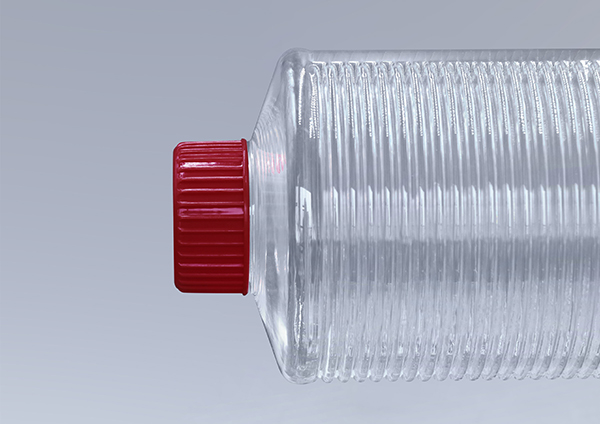
Expanded Surface Polystyrene Roller Bottle
7. Culture Conditions Are Not Stable
Temperature, pH, medium condition, gas exchange, and inoculation volume can affect how quickly cells recover and attach.
For example, cells may attach more slowly when the medium and bottle have not reached the required culture temperature. An unsuitable pH or prolonged exposure outside the incubator may also stress the cells during the initial attachment stage.
The medium volume must be sufficient to distribute cells over the growth surface without creating an inappropriate liquid flow pattern. Because different bottle sizes and cell lines require different conditions, medium volume should be defined through process development rather than selected only according to bottle capacity.
For consistent results, standardize:
Medium preparation
Medium temperature
Inoculation volume
Cell concentration
Time outside the incubator
Cap operation
Incubator temperature and gas conditions
Time and speed of initial rotation
8. TC Surface Performance Is Inconsistent
Adherent cells require a suitable growth surface. TC treatment modifies the polystyrene surface to improve wettability and support cell attachment and spreading.
If surface treatment is inconsistent, cells may attach well in some areas but poorly in others. However, surface quality should not be judged from one microscope field or one abnormal bottle.
A reliable evaluation should compare multiple bottles under controlled conditions while keeping the following factors consistent:
Cell line and passage number
Seeding density
Medium and supplements
Rotation conditions
Observation time
Incubator position
Harvesting procedure
Surface evaluation may include cell attachment, morphology, spreading, confluence pattern, final recovery, contact angle testing, and comparison between production lots.
The physical consistency of the bottle is also relevant. Bottle roundness, wall stability, dimensions, and interaction with the roller apparatus can affect rotation and medium movement, indirectly influencing cell distribution.
A Practical Troubleshooting Sequence
When uneven attachment occurs, investigate the process in a logical order:
Record the attachment pattern and affected bottle positions.
Confirm that the roller apparatus is level.
Observe whether every bottle rotates continuously.
Review the initial rotation settings.
Check the cell suspension for clumps and bubbles.
Review cell harvesting, viability, and dissociation procedures.
Confirm medium, temperature, pH, and incubation conditions.
Compare results with an approved control vessel.
Repeat the test using several bottles from the same lot.
Compare another production lot when surface consistency is suspected.
Changing several parameters at the same time makes it difficult to identify the true cause. Controlled comparison is more reliable than immediately attributing the problem to the cells, equipment, or consumable.
Preventing Uneven Attachment in Vaccine Production
For vaccine manufacturers using multiple roller bottles, small operational differences can become more significant as the number of bottles increases.
A standardized process should define cell preparation, inoculation volume, bottle loading, initial attachment conditions, rotation settings, equipment inspection, observation time points, and acceptance criteria.
It is also useful to document attachment patterns during supplier qualification and lot-to-lot evaluation. Microscopic images, stained bottle observations, cell recovery data, and production records can help distinguish occasional handling errors from repeated product or process variation.
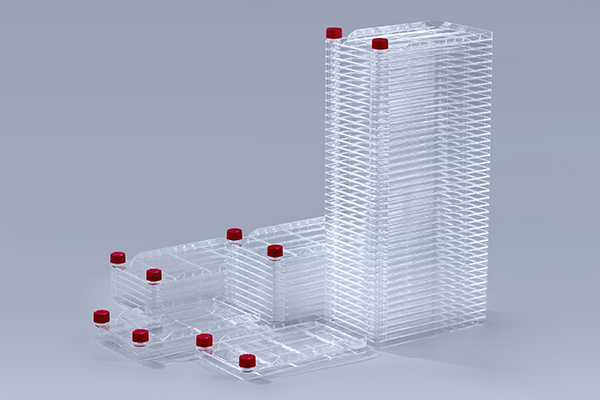
roller bottles vs cell factory
Choosing Roller Bottles for Consistent Adherent Cell Culture
Uniform cell attachment depends on the complete culture system. Healthy cells, a homogeneous inoculum, controlled rotation, level equipment, stable incubation conditions, and a consistent TC-treated surface must work together.
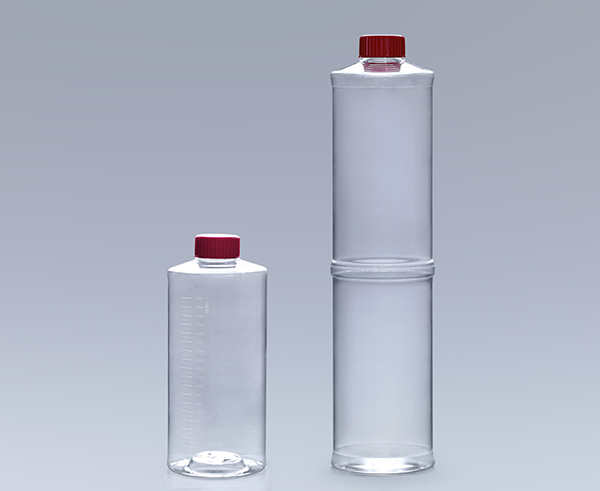
FDCELL supplies sterile TC-treated cell culture roller bottles in 2 L and 5 L formats, with culture areas of 850 cm² and 1,750 cm². The roller bottles are manufactured from medical-grade polystyrene and are designed for adherent cell expansion, virus propagation, vaccine-related applications, and other biopharmaceutical culture processes.
When evaluating a new roller bottle supplier, users should perform sample testing under their actual cell culture conditions. Attachment pattern, cell morphology, growth uniformity, equipment compatibility, harvest performance, batch consistency, and supporting quality documentation should all be considered before routine production use.










