In adherent cell culture, cells are expected to distribute evenly across the growth surface, attach properly, spread normally, and form a consistent monolayer. However, many users may observe that cells cluster in certain areas instead of growing evenly in a cell culture flask. This can lead to irregular confluence, inconsistent cell yield, poor morphology, and unreliable experimental results.
Cell clustering in a flask is not always caused by the flask itself. It may be related to cell suspension quality, seeding technique, medium condition, handling method, surface treatment, incubation environment, or cell line characteristics. Understanding these factors can help laboratories improve culture consistency and reduce batch variation.

cell culture flask
1. Poorly Mixed Cell Suspension
One of the most common reasons for cell clustering is an uneven cell suspension before seeding. If cells are not fully resuspended after centrifugation or harvesting, they may enter the flask as small aggregates. These aggregates then settle in groups and form dense cell clusters.
Before seeding a cell culture flask, the cell suspension should be gently but thoroughly mixed to create a uniform single-cell suspension. Excessive pipetting may damage cells, but insufficient mixing may cause uneven distribution. For adherent cells, the balance between gentle handling and proper resuspension is important.
If visible clumps are present before seeding, users should identify whether the issue comes from incomplete dissociation, excessive cell density, poor harvest technique, or cell line-specific aggregation behavior.
2. Incomplete Cell Dissociation
Cells may cluster when they are not fully dissociated during passaging. If trypsinization or dissociation is too short, some cells remain attached to each other and are transferred into the new flask as aggregates. These clusters may attach as groups instead of forming an even monolayer.
This issue is common when working with strongly adherent cells, high-density cultures, or cells that produce extracellular matrix. To improve dissociation, users can optimize washing, dissociation reagent volume, incubation time, and gentle tapping. However, over-trypsinization should also be avoided because it may reduce cell viability and attachment ability.
A good passaging process should produce a healthy suspension with minimal clumps and high viability before cells are seeded into a new TC-treated cell culture flask.
3. Seeding Density Is Too High
High seeding density can cause cells to settle close together and form crowded areas. When too many cells are seeded into a limited growth area, cells may attach in clusters, grow unevenly, and reach confluence too quickly in some regions while other areas remain sparse.
For T25, T75, T175, and T225 flasks, seeding density should be calculated according to the actual growth surface area and the growth characteristics of the cell line. Using the same cell number across different flask sizes without adjustment can cause inconsistent results.
If clustering appears shortly after seeding, users should check whether the initial cell density is too high, whether the suspension was evenly mixed, and whether the medium volume was appropriate for the flask size.
4. Uneven Liquid Distribution After Seeding
Even if the cell suspension is well prepared, cells may still grow unevenly if the liquid is not distributed properly after seeding. Sudden tilting, excessive shaking, uneven placement, or insufficient medium coverage can cause cells to accumulate in certain areas.
After adding the cell suspension, the flask should be gently moved in a controlled way to distribute cells across the growth surface. Strong circular shaking may push cells toward the edges or corners. In some cases, uneven movement can create dense zones and empty zones within the same flask.
For larger formats such as T175 and T225 flasks, liquid distribution becomes more important because the growth area is larger. Operators should use a consistent seeding method to improve repeatability.
5. Cell Line Characteristics
Some cell lines naturally show stronger cell-to-cell adhesion or a tendency to form aggregates. For example, certain epithelial-like cells, stem cells, primary cells, or high-density adherent cultures may cluster more easily than other cell types.
In these cases, clustering may not be fully eliminated, but it can often be reduced by optimizing dissociation, seeding density, medium formulation, and flask handling. Users should compare the observed pattern with the known behavior of the specific cell line before assuming the issue is caused by the cell culture flask.
If the same cell line grows evenly in one flask brand but clusters in another under identical conditions, then surface performance or flask design should be evaluated more carefully.
6. Medium and Serum Conditions
Culture medium and serum quality can also affect cell distribution and growth pattern. Serum proteins, calcium, magnesium, growth factors, and pH stability may influence cell adhesion and spreading. If the medium is not suitable for the cell line, cells may attach unevenly or grow in dense groups.
For low-serum or serum-free systems, cells may require specific supplements, coatings, or optimized culture conditions. In these workflows, a standard TC-treated cell culture flask may not always produce the same growth pattern as a specially coated surface.
When clustering appears after changing medium, serum batch, supplement, or flask supplier, users should evaluate these variables one by one rather than changing several conditions at the same time.
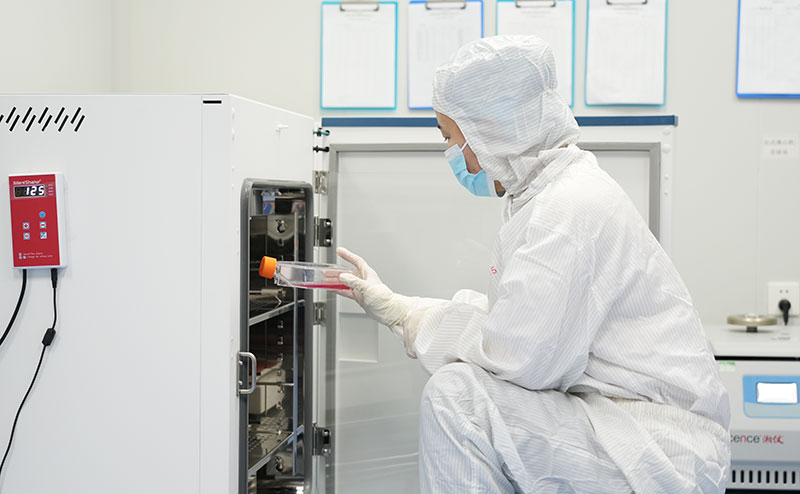
quality control and certificates
7. Surface Treatment and Flask Quality
For adherent cells, the surface of a TC-treated cell culture flask should support uniform cell attachment and spreading. If surface treatment is uneven, cells may attach better in some areas and poorly in others. This can result in irregular distribution, localized clusters, or inconsistent confluence.
Flask flatness and optical clarity also matter. If the growth surface is not flat enough, medium depth and cell settlement may vary across the flask. This can lead to cell accumulation in certain regions, especially in larger flasks.
When evaluating a flask, users should observe whether clustering appears randomly, repeatedly in the same area, or only with specific lots. Repeated patterns may suggest issues related to surface uniformity, flask geometry, or handling method.
8. Incubator Placement and Vibration
Incubator conditions may also affect cell distribution. If flasks are placed on an uneven shelf, moved too soon after seeding, or exposed to repeated vibration, cells may shift before attachment is complete. This can cause uneven settlement and visible clustering after incubation.
After seeding, flasks should be placed carefully and allowed to remain undisturbed during the initial attachment period. This is especially important for sensitive adherent cells or cultures with low seeding density.
Operators should also avoid stacking or positioning flasks in a way that affects airflow, temperature stability, or medium distribution.
9. How to Troubleshoot Cell Clustering
When cells cluster instead of growing evenly, troubleshooting should be systematic. Start by checking the cell suspension before seeding. If clumps are already visible, improve dissociation and resuspension first. If the suspension looks uniform but clustering appears after incubation, review seeding technique, flask movement, medium volume, surface performance, and incubator placement.
A practical troubleshooting process may include:
Compare the new flask with the current approved flask
Use the same cell line, passage number, medium, and seeding density
Observe cells at 4 hours, 24 hours, and 48 hours after seeding
Take images from the center, edges, and corners of the flask
Compare multiple flasks from the same lot
Test another lot if available
Record cell morphology, confluence, and final yield
This controlled comparison helps identify whether the problem is related to the cell preparation, culture protocol, or flask performance.
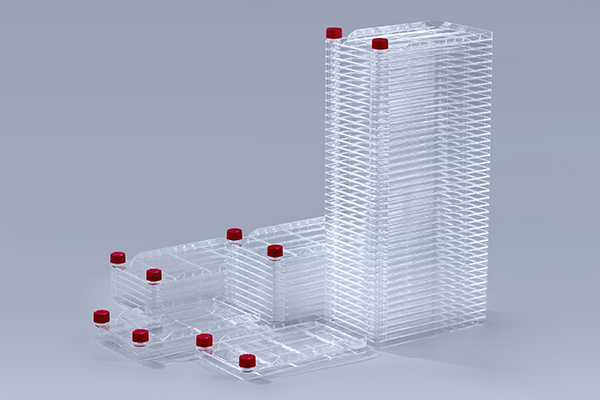
Multilayer Cell Factory
10. Choosing a Reliable Cell Culture Flask
A reliable cell culture flask should provide a consistent growth surface, good optical clarity, stable flask geometry, secure cap performance, sterile packaging, and batch traceability. For adherent cell culture, the treated surface should support even cell attachment, spreading, and growth.
FDCELL supplies sterile cell culture flasks in T25, T75, T175, and T225 sizes, with TC-treated and non-treated surfaces available. The flasks are designed for laboratories, research institutions, biopharmaceutical companies, vaccine-related research, distributors, and OEM/private label projects.
For users experiencing cell clustering or uneven growth, sample testing under actual culture conditions is recommended before large-volume purchasing. Evaluating cell distribution, morphology, confluence, viability, and final yield can help confirm whether the flask is suitable for the intended application.
In adherent cell culture, cells are expected to distribute evenly across the growth surface, attach properly, spread normally, and form a consistent monolayer. However, many users may observe that cells cluster in certain areas instead of growing evenly in a cell culture flask. This can lead to irregular confluence, inconsistent cell yield, poor morphology, and unreliable experimental results.
Cell clustering in a flask is not always caused by the flask itself. It may be related to cell suspension quality, seeding technique, medium condition, handling method, surface treatment, incubation environment, or cell line characteristics. Understanding these factors can help laboratories improve culture consistency and reduce batch variation.










