Roller bottles are widely used for adherent cell expansion, virus propagation, and vaccine manufacturing. Under stable culture conditions, cells should remain attached to the inner surface while the bottle rotates continuously.
However, cells may sometimes become rounded, detach from the surface, or form floating aggregates. This can reduce the available cell monolayer and affect downstream virus production.
Cell detachment is not always caused by the roller bottle itself. Cell preparation, rotation settings, medium conditions, equipment operation, and virus-induced effects should all be investigated.
1. Cells Have Not Fully Attached
Cells need sufficient time to settle, attach, and spread after inoculation. If normal rotation begins too early, weakly attached cells may be lifted back into suspension.
The required attachment time depends on the cell line, seeding density, medium, and validated production process. Operators should follow established procedures rather than applying the same attachment time to every cell type.
2. Rotation Speed Is Too High
Excessive rotation speed can increase liquid movement across the culture surface and disturb newly attached cells.
Sudden changes in speed may also cause detachment, even when the final rotation speed is acceptable. Rotation settings should therefore be adjusted gradually and validated according to the bottle diameter, medium volume, cell type, and culture stage.
Individual bottles should also be observed after loading to confirm that they rotate smoothly without slipping, jumping, or stopping.
3. Cells Were Damaged During Passage
Excessive exposure to trypsin, harsh pipetting, repeated centrifugation, or incomplete neutralization may damage proteins involved in cell attachment.
Damaged cells may initially appear attached but later become rounded and detach during rotation.
When investigating this issue, review:
Cell viability
Dissociation time
Pipetting intensity
Passage number
Cell morphology
Time between harvesting and inoculation
A control culture in a qualified cell culture flask can help determine whether the problem comes from the cells or the roller bottle process.
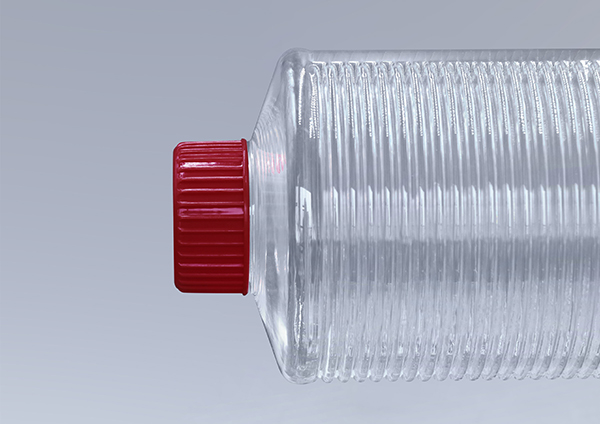
Expanded Surface Polystyrene Roller Bottle
4. Seeding Density Is Unsuitable
A very low seeding density may delay cell recovery and attachment. An excessively high density may cause the culture to become over-confluent too quickly.
Over-confluent cells may experience nutrient depletion, waste accumulation, and reduced attachment stability. In some cases, sections of the monolayer may peel away as cell sheets.
Seeding density should be selected according to the cell growth rate, planned culture duration, roller bottle surface area, and timing of virus inoculation.
5. Medium and Culture Conditions Are Unstable
Temperature, pH, osmolality, medium composition, and working volume can all influence cell attachment.
Detachment may occur when:
Cold medium is added directly to the culture
Cells remain outside the incubator too long
The medium becomes depleted
The pH moves outside the validated range
Medium exchange is performed too forcefully
Air bubbles repeatedly move across the monolayer
Medium should be added gently along the bottle wall. Vigorous shaking and forceful pipetting should be avoided.
The working volume should also be validated according to the bottle geometry, rotation speed, cell line, and culture duration.
6. Equipment Operation Is Unstable
An uneven or poorly maintained roller apparatus can create irregular bottle movement.
Common equipment-related causes include:
The apparatus is not level
Roller surfaces are worn or contaminated
Bottles slip during operation
Rotation is intermittent
The equipment starts or stops suddenly
Bottles move sideways on the rollers
Bottle dimensions and roundness can also affect rotation stability. A bottle that does not maintain consistent contact with the rollers may experience uneven liquid movement and mechanical stress.
7. Surface Quality, Contamination, or Virus Effects
TC treatment improves the ability of adherent cells to attach and spread. If the culture surface is scratched, contaminated, or inconsistent, cells may detach more easily.
However, one abnormal bottle is not enough to confirm a surface problem. Multiple bottles from the same lot should be compared with another lot or a qualified control under identical conditions.
For vaccine production, detachment may also result from virus-induced cytopathic effects. Many viruses naturally cause cell rounding, loss of attachment, or cell lysis after infection.
The following factors should be reviewed:
Time since virus inoculation
Expected cytopathic pattern
Uninfected control bottles
Historical production results
Possible bacterial, fungal, or mycoplasma contamination
If uninfected controls remain stable while infected bottles show the expected cytopathic effect, detachment may be associated with virus replication rather than the roller bottle.
Troubleshooting Cell Detachment
When detachment occurs, investigate the process in this order:
Record when the detachment began.
Check cell viability and passage conditions.
Review the attachment period and rotation speed.
Confirm that every bottle rotates smoothly.
Check medium temperature, pH, and working volume.
Inspect for bubbles, contamination, and cap problems.
Compare affected bottles with a qualified control.
Test multiple bottles before judging the TC surface.
Changing several parameters at the same time makes it difficult to identify the real cause. Controlled comparison is more reliable.

roller bottles vs cell factory
Choosing Roller Bottles for Stable Cell Culture
Stable roller bottle culture depends on healthy cells, controlled operating conditions, reliable equipment, and consistent culture vessels.
A qualified roller bottle should provide:
A uniform TC-treated surface
Stable dimensions and roundness
Smooth rotation
Reliable bottle and cap integrity
Sterile packaging
Lot traceability
Consistent batch performance
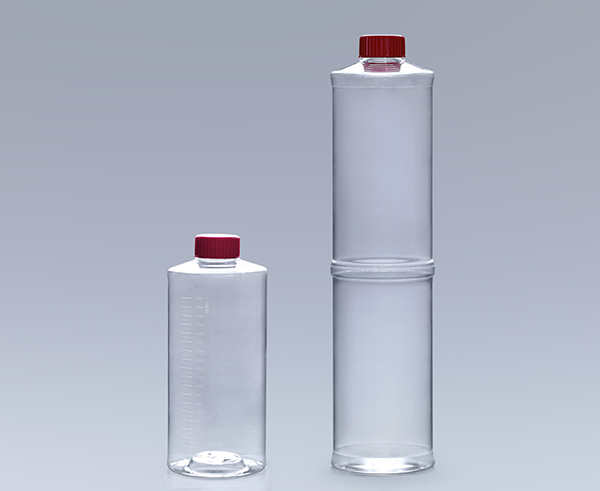
FDCELL provides sterile TC-treated cell culture roller bottles in 2 L and 5 L formats, with culture areas of 850 cm² and 1,750 cm². They are designed for adherent cell expansion, virus propagation, vaccine manufacturing, and other biopharmaceutical applications.
Before introducing a new roller bottle into a validated process, users should evaluate cell attachment, morphology, growth performance, equipment compatibility, and lot-to-lot consistency under their actual culture conditions.










