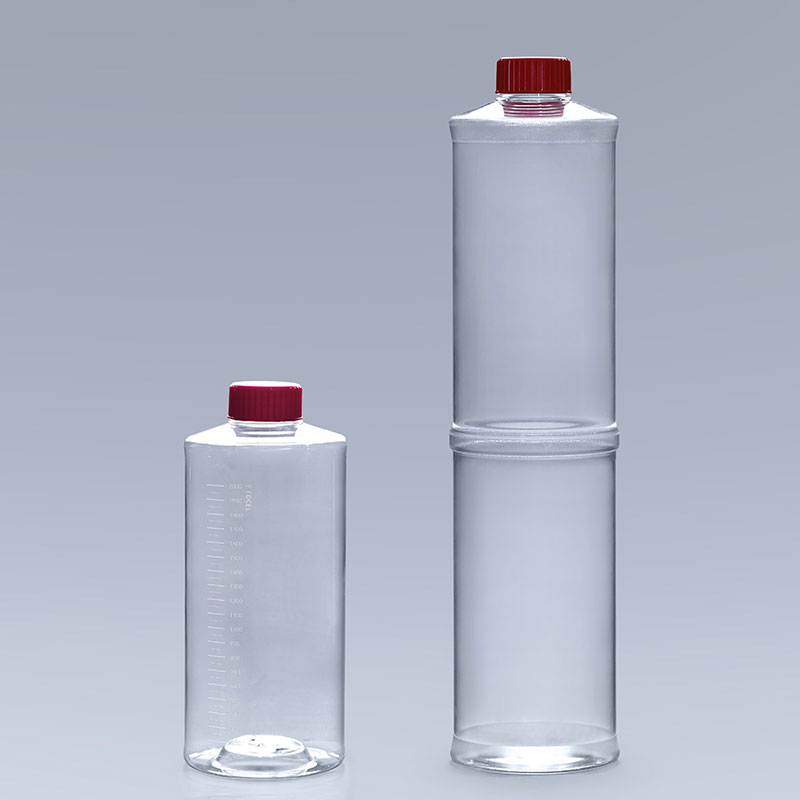
A roller bottle is a cylindrical cell culture vessel mainly used for the expansion of adherent cells. Unlike stationary cell culture flasks, roller bottles are placed horizontally on a roller apparatus and rotate slowly during culture.
As the bottle rotates, the culture medium repeatedly flows across the internal growth surface, allowing attached cells to receive nutrients while maintaining a relatively large surface area for cell growth. Roller bottle systems are widely used in cell expansion, virus propagation, vaccine-related processes, and other applications that require larger-scale adherent cell culture.
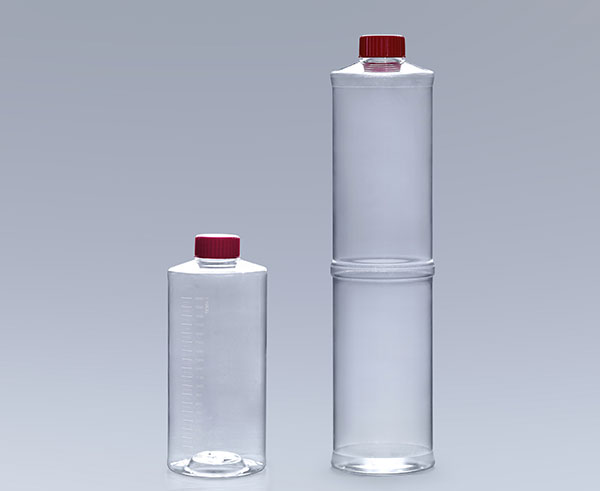
Cell culture roller bottles are commonly used for adherent cell expansion and virus propagation
How Does a Roller Bottle Work?
Cells are first introduced into the roller bottle together with the appropriate culture medium. The bottle is then placed on a compatible roller apparatus and rotated at a controlled speed.
During rotation, the culture medium continuously moves across the inner surface of the bottle. This repeated contact helps distribute nutrients across the cell monolayer and supports gas and nutrient exchange during culture.
The actual culture conditions depend on the cell line and process. Parameters such as seeding density, medium volume, rotation speed, temperature, gas exchange, and culture time should therefore be optimized together.
For more information, see:
How Roller Speed and Medium Volume Affect Roller Bottle Cell Culture
How to Determine the Right Seeding Density for Roller Bottle Cell Culture
When Is a Roller Bottle Cell Monolayer Ready for Virus Inoculation?
Main Components of a Roller Bottle
Bottle Body
Most disposable cell culture roller bottles are manufactured from transparent polystyrene, allowing visual observation of the culture during operation.
The cylindrical shape enables the bottle to rotate smoothly on a roller apparatus while providing a relatively large internal growth surface.
Cell Growth Surface
For adherent cell culture, the internal surface of the roller bottle may be tissue-culture treated to improve surface wettability and support cell attachment.
TC-treated roller bottles are commonly selected for adherent cells, while non-treated versions may be used for processes where surface treatment is not required.
Cap and Closure
Roller bottles are generally available with different closure options.
Vent caps allow gas exchange during culture, while seal caps provide a more closed configuration. The appropriate cap type should be selected according to the culture process and gas-exchange requirements.
Roller Apparatus
A roller bottle is normally used together with a motorized roller apparatus. The apparatus rotates the bottle continuously at a controlled speed.
Rotation speed should be evaluated carefully because excessive or insufficient rotation can affect cell attachment, medium movement, and culture consistency.
What Are Roller Bottles Used For?
Roller bottles are mainly used for processes that require the expansion of adherent cells over a larger culture surface than conventional T-flasks can provide.
Common applications include:
- Adherent cell expansion
- Virus propagation
- Vaccine research and production
- Biopharmaceutical process development
- Cell-based research
- Scale-up from laboratory flasks to larger adherent culture systems
Roller bottles remain particularly useful in established vaccine manufacturing processes where the equipment, cell line, and operating procedures have already been validated.
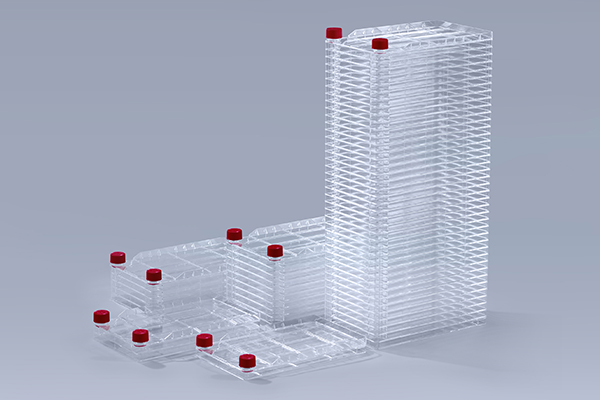
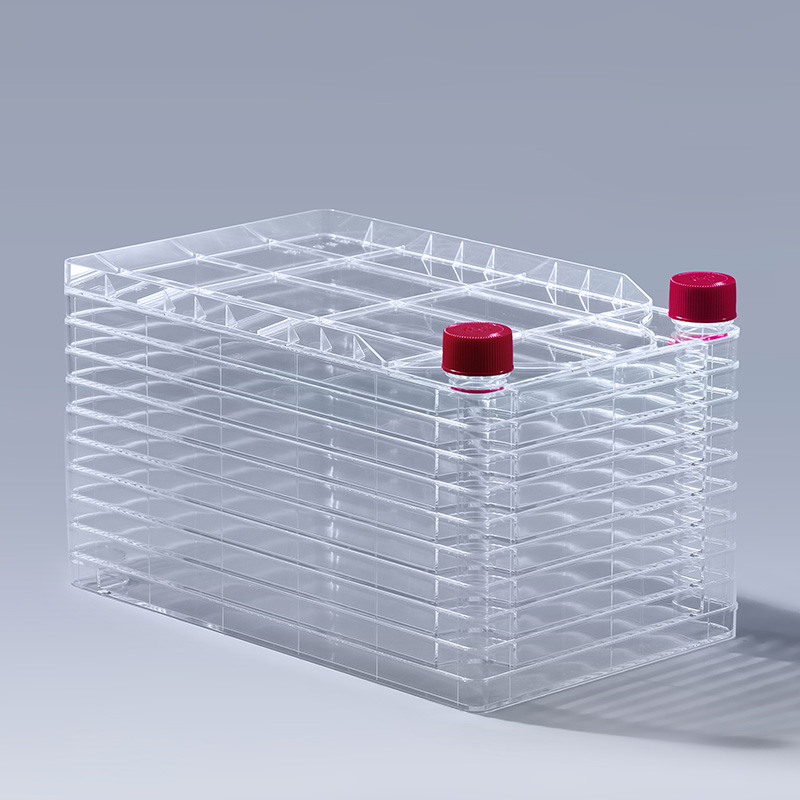
Multilayer Cell Factory
Roller Bottle vs. Cell Factory
Both roller bottles and cell factories are widely used for adherent cell culture, but they differ in scale-up method, equipment requirements, and operating workflow.
| Comparison | Roller Bottle | Cell Factory |
|---|---|---|
| Culture format | Rotating cylindrical vessel | Multi-layer static culture system |
| Scale-up method | Increase the number of bottles | Increase the number of layers or units |
| Equipment | Requires roller apparatus | Usually requires compatible incubator space |
| Handling | Individual bottles are handled separately | Multiple culture layers are integrated into one unit |
| Flexibility | Suitable for process development and small-to-medium scale culture | Better suited to larger-scale adherent cell expansion |
| Typical applications | Cell expansion, virus propagation, vaccine processes | Large-scale cell expansion, vaccine production, viral vector and bioprocess applications |
Roller bottles can be a practical choice when the process is already established around rotating culture vessels or when flexible batch sizes are required.
Cell factories provide a larger culture surface within a compact footprint and can reduce the number of individual vessels required as production scale increases.
The appropriate system depends on the cell line, required culture area, production scale, existing equipment, process validation, and operating workflow.
For a more detailed comparison, read Roller Bottles vs. Cell Factory in Vaccine Manufacturing.
Standard vs. Expanded Surface Roller Bottles
Standard roller bottles provide a smooth internal culture surface.
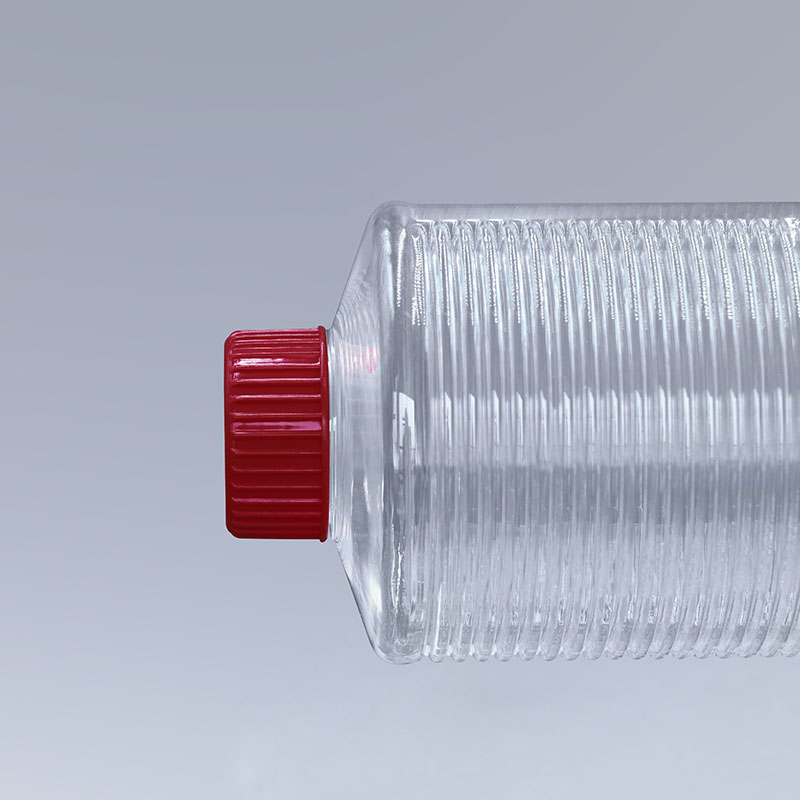
Expanded surface roller bottles use a ribbed or structured internal design to increase the available growth area while maintaining a relatively compact bottle format.
For example, an expanded surface roller bottle may be useful when more adherent cell growth area is required but the available roller apparatus space is limited.
The appropriate design should be selected according to the required culture area, cell type, process scale, and equipment compatibility.
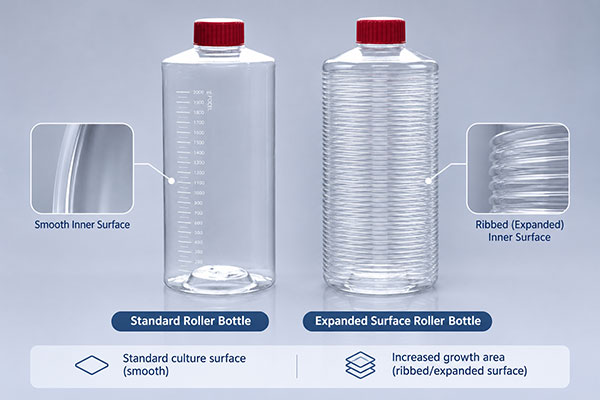
Standard and expanded surface roller bottles
What Should Be Considered When Choosing a Roller Bottle?
When selecting a roller bottle for a cell culture process, consider:
- Required growth surface area
- Bottle size and roller apparatus compatibility
- TC-treated or non-treated surface
- Seal cap or vent cap
- Cell line and attachment requirements
- Medium volume
- Rotation speed
- Sterility and quality documentation
- Batch consistency
- Scale-up requirements
For validated or production-scale processes, product consistency and documentation are often just as important as nominal bottle specifications.
FDCELL Cell Culture Roller Bottles
FDCELL provides cell culture roller bottles for adherent cell culture and cell expansion.
Available configurations include:
- 2 L and 5 L formats
- TC-treated and non-treated surfaces
- Seal cap and vent cap options
- Standard and expanded surface designs
For complete specifications, packaging information, samples, and bulk purchasing requirements, visit the Cell Culture Roller Bottle product page.
Frequently Asked Questions
What cells are commonly cultured in roller bottles?
Roller bottles are mainly used for adherent cell lines that require a surface for attachment and growth. The suitability of a roller bottle depends on the specific cell line and culture process.
Why are roller bottles rotated during cell culture?
Rotation allows the culture medium to repeatedly contact the cell growth surface. This helps maintain nutrient distribution across the cell monolayer during culture.
Are roller bottles suitable for suspension cells?
Roller bottles are primarily associated with adherent cell culture. Suspension cells are generally cultured using systems designed for suspension growth, such as shake flasks or stirred bioreactors.
How do I choose the correct roller bottle size?
Selection should be based on the required growth area, culture scale, roller apparatus compatibility, and process conditions rather than bottle volume alone.
When should an expanded surface roller bottle be used?
An expanded surface design may be useful when a larger growth area is required within a limited bottle footprint. Culture parameters should still be evaluated for the specific cell line and process.