In vaccine manufacturing, roller bottles are often used to expand adherent cells before virus inoculation. One of the key process decisions is determining when the cell monolayer is ready for the next stage.
Virus inoculation should not be based only on the number of days after seeding. Cell growth rate can vary between batches because of cell condition, seeding density, medium, incubation conditions, and equipment operation.
Instead, readiness should be evaluated using several indicators together.
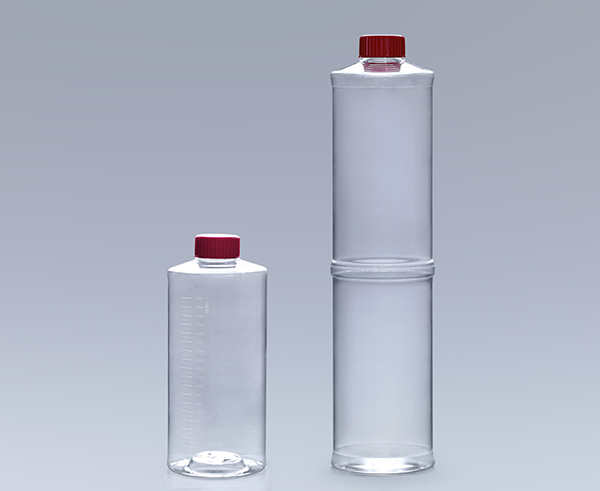
Cell Culture Roller Bottle
1. Check the Target Confluence
Cell confluence is usually one of the first parameters evaluated before virus inoculation.
The appropriate target depends on the cell line, virus, and validated vaccine process. Some processes require a nearly complete monolayer, while others may use cells before full confluence.
The important point is consistency.
If one production batch is infected at a significantly different cell density from another, virus susceptibility and production performance may also change.
For this reason, target confluence should be defined as part of the process rather than determined only by operator experience.
2. Evaluate Cell Morphology
Confluence alone does not tell the complete story.
A roller bottle may appear to have a high level of surface coverage while the cells themselves are already stressed.
Before virus inoculation, cells should be compared with the expected morphology for that cell line.
Warning signs may include abnormal rounding, excessive granularity, enlarged cells, unusual gaps in the monolayer, or increased floating debris.
Healthy morphology generally provides a better starting point for a consistent infection stage.
3. Check Monolayer Uniformity
A suitable cell monolayer should not only reach the target confluence—it should also be reasonably uniform across the growth surface.
Dense bands, sparse regions, or large areas without cells may indicate problems with:
Initial cell distribution
Seeding density
Rotation conditions
Bottle position
Cell attachment
Equipment operation
Significant unevenness can result in different cell densities within the same roller bottle and may increase variability during virus propagation.
4. Look for Premature Cell Detachment
Before inoculation, check the medium and culture surface for signs of unexpected cell loss.
Small numbers of floating cells may occur normally, but increasing cell debris, large detached areas, or cell sheets lifting from the surface should be investigated.
Premature cell detachment during roller bottle culture may be related to cell condition, excessive confluence, medium changes, rotation settings, or surface-related factors.
Introducing virus into an already unstable monolayer can make it more difficult to distinguish process problems from virus-induced cytopathic effects later.>>>Why Cells Detach During Roller Bottle Culture
5. Review the Time Since Seeding
Culture time is useful as a process reference, but it should not be the only release criterion for virus inoculation.
For example, if an established process normally reaches the target condition within a defined period but suddenly requires much longer, the reason should be investigated.
Possible causes include:
Lower viable seeding density
Poor attachment
Changes in medium
Cell passage differences
Equipment variation
Incubator conditions
The question should therefore not simply be:
“Has the culture reached Day 3 or Day 4?”
A better question is:
“Has the cell monolayer reached the defined condition expected at this stage?”
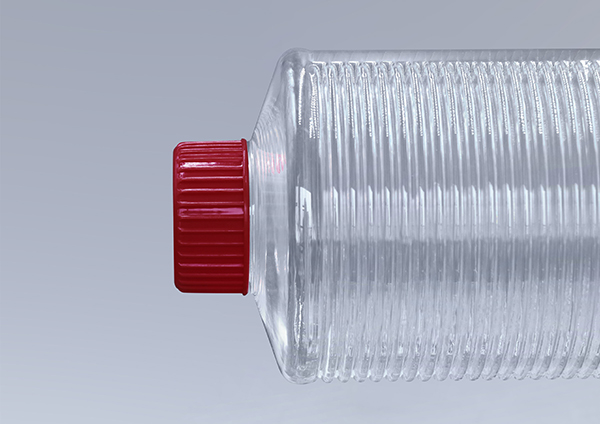
Expanded Surface Polystyrene Roller Bottle
6. Confirm Cell Attachment Is Stable
Cells should remain firmly attached before the infection stage begins.
Weak attachment may become more apparent during medium removal, washing, virus inoculation, or subsequent rotation.
If cells detach easily during routine handling, the culture may not provide a stable starting point for virus production.
This is one reason why seeding density and early attachment conditions can affect later stages of the process even when the final confluence appears acceptable.>>>How to Determine the Right Seeding Density for Roller Bottle
7. Check the Medium and Culture Environment
Before virus inoculation, the condition of the culture medium can provide additional information.
Unexpected pH changes, unusual color, turbidity, excessive debris, or signs of contamination should be investigated before proceeding.
Depending on the vaccine process, the growth medium may also need to be replaced with infection medium before virus addition.
Whether medium exchange before virus inoculation is necessary depends on the cell line, virus, medium formulation, and validated process.>>>Medium Exchange Before Virus Inoculation in Roller Bottle Culture: What Should Be Considered?
It should not be treated as a universal requirement for all roller bottle cultures.
8. Maintain Consistency Between Roller Bottles
In large vaccine-production runs, dozens or even hundreds of roller bottles may be cultured together.
The challenge is therefore not only determining whether one bottle is ready, but whether the entire production batch has reached a sufficiently consistent condition.
Operators may compare representative bottles for:
Confluence
Cell morphology
Monolayer uniformity
Floating cell level
Culture time
General appearance
Large differences between bottles may indicate upstream variation that should be investigated before proceeding to virus inoculation.
Define a Process Window, Not Just a Single Number
The best approach is to establish a qualified process window that combines several indicators.
A roller bottle cell monolayer may be considered ready when the culture reaches the expected confluence, cells show appropriate morphology, attachment remains stable, the monolayer is sufficiently uniform, and there are no abnormal signs of contamination or cell stress.
The exact acceptance criteria should be established for the specific cell-virus system.
Consistent Virus Production Starts Before Infection
Virus inoculation is a critical transition point in vaccine manufacturing.
Variability that begins during cell expansion can carry forward into virus production, harvest timing, and final process performance.
For this reason, the condition of the cell monolayer should be evaluated systematically before infection rather than relying only on culture time.
FDCELL provides roller bottles for adherent cell expansion, virus propagation, veterinary vaccine manufacturing, and other biopharmaceutical applications.
A consistent roller bottle culture process—from seeding and attachment through monolayer formation and virus inoculation—helps provide a more reproducible foundation for downstream vaccine production.










