Efficient cell harvesting is a critical step in Cell Factory culture, especially when adherent cells are expanded across multiple layers for vaccine manufacturing, viral vector production, cell therapy process development, and other biopharmaceutical applications.
Compared with harvesting cells from conventional T-flasks, a multilayer Cell Factory system requires greater attention to liquid distribution, cell detachment, collection efficiency, and handling consistency. An inefficient harvesting process may leave cells attached to the culture surface, increase cell loss, or introduce unnecessary variability between batches.
This article discusses practical considerations for improving cell harvesting from Cell Factory systems while maintaining a consistent and scalable workflow.
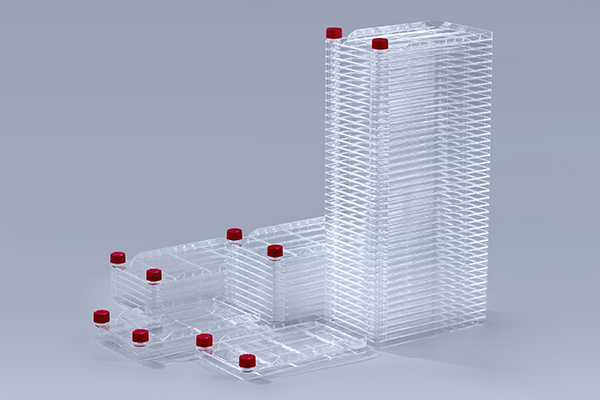
Cell Seeding Density and Medium Volume Guide
1. Confirm Cell Condition Before Harvesting
The harvesting process begins before any medium is removed.
Cell morphology, confluence, viability, and the intended downstream application should all be considered when determining the appropriate harvest point.
Harvesting too early may result in insufficient cell yield, while excessive culture time can affect cell condition and make detachment more difficult for some cell types.
Before harvesting, operators should evaluate the culture according to established process criteria rather than relying only on a fixed culture time.
2. Remove Culture Medium Carefully
The first operational step is typically the removal of spent culture medium.
For a multilayer Cell Factory, liquid should be drained consistently from all layers while minimizing unnecessary movement of the vessel.
Attention should be paid to:
Complete medium removal
Consistent vessel positioning
Controlled liquid flow
Avoidance of excessive foaming or bubbles
Prevention of unnecessary disturbance to the cell layer
A standardized draining procedure becomes increasingly important when moving from smaller Cell Factory configurations to 10-layer or 40-layer systems.
3. Ensure Uniform Contact with the Detachment Solution
For processes that harvest adherent cells by enzymatic or other dissociation methods, the detachment solution needs to contact the culture surface uniformly.
This can be more challenging in a multilayer vessel than in a conventional flask.
Poor liquid distribution may cause cells in some areas to detach earlier than others, resulting in inconsistent recovery.
Operators should therefore establish a validated procedure for distributing the selected dissociation solution across all culture layers.
The appropriate reagent, exposure time, temperature, and operating procedure should always be determined according to the specific cell line and manufacturing process.
4. Avoid Excessive Cell Exposure During Detachment
Complete detachment is important, but longer exposure is not necessarily better.
Excessive exposure to dissociation reagents can affect cell viability or surface characteristics, depending on the cell type and reagent used.
A well-controlled Cell Factory harvesting procedure should therefore balance two objectives:
achieving sufficient cell detachment while minimizing unnecessary exposure.
Cell morphology and detachment status should be monitored according to the established process before proceeding to collection.
5. Improve Cell Recovery During Collection
Once cells have detached, efficient collection becomes the next priority.
Residual cells can remain inside the Cell Factory if the collection procedure does not adequately recover liquid from all layers.
Factors affecting recovery may include:
Vessel orientation
Rinsing procedure
Collection volume
Tubing configuration
Transfer method
Number of handling steps
Standardizing these parameters can help improve cell recovery and reduce variability between operators and production batches.
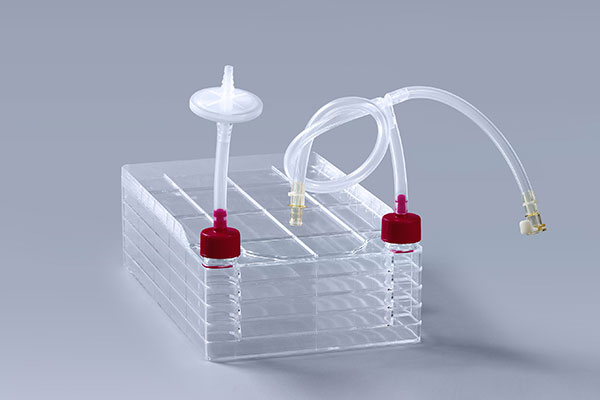
Closed System Cell Factory
6. Consider Closed-System Harvesting
For larger-scale biopharmaceutical applications, a Closed System Cell Factory can simplify the harvesting workflow.
Sterile tubing assemblies can connect the Cell Factory directly to collection bags or downstream processing equipment, reducing the need to repeatedly open the culture system.
A closed harvesting workflow may support:
Aseptic fluid transfer
Reduced manual handling
Lower contamination exposure
More consistent collection procedures
Integration with pumps and collection bags
This can be particularly useful in vaccine manufacturing, viral vector production, and other processes where contamination control and workflow consistency are important.
7. Standardize the Harvesting Procedure During Scale-Up
A harvesting method that works well in a small vessel may not transfer directly to a larger multilayer system.
When scaling from smaller culture vessels to a 10-layer Cell Factory or 40-layer Cell Factory, manufacturers should consider whether changes are needed in:
Liquid volumes
Vessel handling
Detachment procedures
Collection methods
Tubing assemblies
Operator workflow
Whenever possible, these parameters should be defined during process development and incorporated into standardized operating procedures.
The objective is not simply to harvest more cells, but to maintain reproducible recovery as production scale increases.
8. Monitor Harvest Performance
Harvesting efficiency should be evaluated as part of overall Cell Factory process performance.
Depending on the application, useful indicators may include:
Total recovered cell number
Cell viability
Recovery efficiency
Residual cells after harvesting
Cell morphology
Batch-to-batch consistency
Monitoring these indicators can help identify whether cell losses originate from culture performance, detachment, or the collection procedure itself.
Cell Factory Quality Also Matters
Harvesting performance is influenced not only by the operating procedure but also by the culture vessel itself.
Consistent surface treatment, uniform growth surfaces, reliable sealing, and stable product dimensions can contribute to reproducible adherent cell culture and harvesting.
FDCELL provides Cell Factory systems in multiple configurations for scalable adherent cell expansion, including 1-layer, 2-layer, 5-layer, 10-layer, and 40-layer formats.
Options are also available with customized tubing assemblies for closed-system media transfer and cell harvesting.
Conclusion
Successful cell harvesting from Cell Factory systems depends on more than achieving cell detachment. Medium removal, liquid distribution, dissociation conditions, collection efficiency, vessel handling, and process standardization all influence the final recovery.
As adherent cell culture moves toward larger production scales, standardized and closed-system harvesting workflows can help reduce manual intervention and improve process consistency.
The optimal harvesting procedure should ultimately be established according to the specific cell line, culture medium, dissociation method, Cell Factory configuration, and downstream process requirements.










