In laboratory research and biopharmaceutical production, shake flasks play an essential role in suspension cell culture, microbial fermentation, and media preparation. Among them, the Erlenmeyer Shake Flask is one of the most commonly used tools for efficient cell expansion and culture optimization.
Although many researchers focus on media composition and incubation conditions, flask design itself has a major impact on cell growth, oxygen transfer, and experimental consistency. Choosing the right Erlenmeyer flask can significantly improve culture performance and help achieve more reliable results.
In this article, we explore how shake flask design affects cell growth and what features should be considered when selecting the right flask.
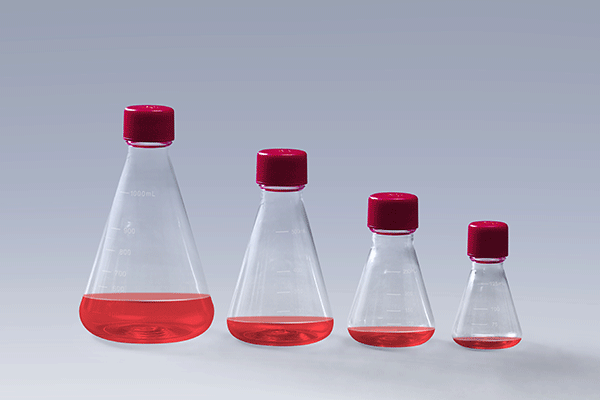
Why Flask Design Matters in Cell Culture
Unlike static culture systems, shake flasks rely on orbital shaking to improve aeration and nutrient distribution. The shape, material, cap design, and surface structure of the flask directly influence:
Oxygen transfer efficiency
Mixing performance
Cell suspension stability
Contamination control
Evaporation rate
Scale-up consistency
A poorly designed flask may lead to uneven growth, reduced viability, or inconsistent results between batches.
Key Design Factors of an Erlenmeyer Shake Flask
1. Flask Shape and Bottom Design
The classic conical shape of an Erlenmeyer flask helps create smooth liquid حركة during shaking, improving oxygen exchange and reducing dead zones where cells may settle.
A wide bottom provides better stability and increases the surface area for gas exchange, while the narrow neck helps reduce contamination risks.
For suspension cultures such as CHO cells, HEK293 cells, and hybridoma cells, this design supports healthier and more uniform growth.
2. Vent Cap vs Sealed Cap
Cap design strongly affects gas exchange.
Vent Caps
Vent caps allow sterile air exchange through a membrane filter, supporting oxygen supply and CO2 balance. They are ideal for:
Mammalian cell culture
Suspension cell expansion
Long-term incubation
Sealed Caps
Sealed caps are more suitable for short-term storage, transportation, or media preparation where gas exchange is less critical.
Selecting the correct cap improves cell metabolism and reduces contamination risks.
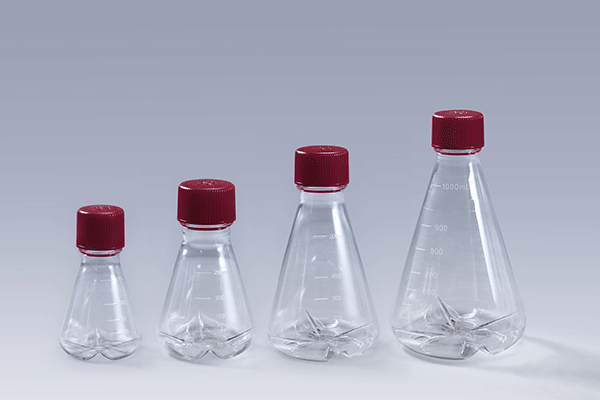
3. Baffled vs Flat Bottom
Flat Bottom Flask
Suitable for gentle mixing and shear-sensitive cells.
Baffled Flask
Baffled designs improve turbulence and oxygen transfer, making them ideal for:
High-density microbial culture
Bacterial fermentation
Yeast cultivation
For mammalian cells, flat-bottom Erlenmeyer Shake Flasks are usually preferred to minimize shear stress.
User Guide for Erlenmeyer Shake Flask
4. Material Quality and Transparency
High-quality virgin PETG or PC material provides:
Excellent optical clarity
Strong chemical resistance
Low extractables
Better durability during shaking
Clear flasks allow easy observation of cell density and contamination without interrupting the culture process.
5. Sterility and Manufacturing Standards
Sterile, endotoxin-free, and DNase/RNase-free flasks are critical for sensitive applications in biopharma and vaccine production.
Products manufactured in certified cleanrooms with strict leak testing and visual inspection ensure safer and more reliable experiments.
Common Applications of Erlenmeyer Shake Flask
The Erlenmeyer Shake Flask is widely used in:
CHO cell culture
HEK293 suspension culture
Hybridoma cell expansion
Stem cell research
Microbial fermentation
Media preparation
Protein expression studies
Vaccine development
It is often the first step before scaling up to bioreactors.
Why Choose FDCELL Erlenmeyer Shake Flasks
FDCELL provides high-quality disposable Erlenmeyer flasks designed for demanding laboratory and biopharmaceutical applications.
Our advantages include:
High transparency PETG/PC materials
Vented and sealed cap options
Flat and baffled bottom designs
Sterile and ready-to-use products
Leak-tested and quality inspected
Multiple volume options from 125mL to 5000mL
OEM and bulk supply support
We help laboratories and distributors improve efficiency while ensuring consistent culture performance.
Final Thoughts
Shake flask design is not just about appearance—it directly influences cell growth, oxygen transfer, and experimental success.
Choosing the right Erlenmeyer Shake Flask helps improve suspension culture efficiency, reduce contamination risks, and support smooth scale-up from research to production.
For reliable cell culture performance, investing in high-quality shake flasks is a smart and necessary decision.










