For biopharmaceutical companies, vaccine manufacturers, laboratories, and distributors, a standard cell factory may not always fit every process.
An OEM Cell Factory can be adapted around different cell culture workflows, connection methods, packaging requirements, and supply needs. Customization does not necessarily mean changing the entire product structure. In many projects, it is about selecting the right multilayer format and combining it with suitable caps, tubing assemblies, connectors, labels, and packaging.
So, what can actually be customized when sourcing a cell factory?
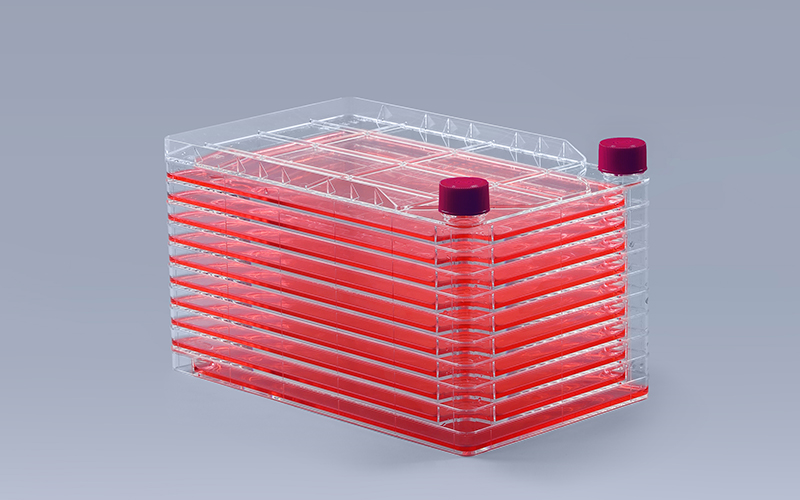
Cell Factory 10 Layers TC-treated
1. Cell Factory Layer Configuration
The first consideration is usually the required culture scale.
Multilayer cell factories are available in different formats to support different stages of cell expansion. FDCELL provides:
1-layer Cell Factory
2-layer Cell Factory
5-layer Cell Factory
10-layer Cell Factory
40-layer Cell Factory
Customers can select the appropriate configuration according to culture area, production scale, available equipment, and workflow.
For projects moving from laboratory-scale culture toward larger-scale production, different layer configurations can also be used during process scale-up.
2. Caps and Connection Options
The connection interface is another important part of an OEM Cell Factory project.
Depending on the workflow, customers may require different caps or connection configurations for media filling, cell seeding, liquid transfer, or harvesting.
Customization may include:
Standard caps
Venting configurations
Transfer caps
Tubing-compatible caps
Different inlet and outlet arrangements
Quick-change connection options
The goal is to make the cell factory easier to integrate into the customer's existing cell culture process.
3. Tubing Assemblies
For larger-scale cell culture, customization often extends beyond the cell factory itself.
A cell factory tubing assembly can be configured to connect the culture vessel with media bags, transfer containers, harvest bags, or additional cell factories.
For more information on how tubing systems support liquid transfer and scale-up, see How Tubing Assemblies Improve Cell Factory Operations.
Typical customization options include:
Tubing material
Tubing length
Tubing diameter
Number of branches
Connector type
Clamps
Filters
Bag connections
Single or multiple Cell Factory connections
This allows customers to build a more integrated liquid-transfer setup around their actual process.
For example:
Media Bag → Tubing Assembly → Cell Factory → Harvest Container
For larger operations, several Cell Factories can also be connected through customized tubing assemblies.
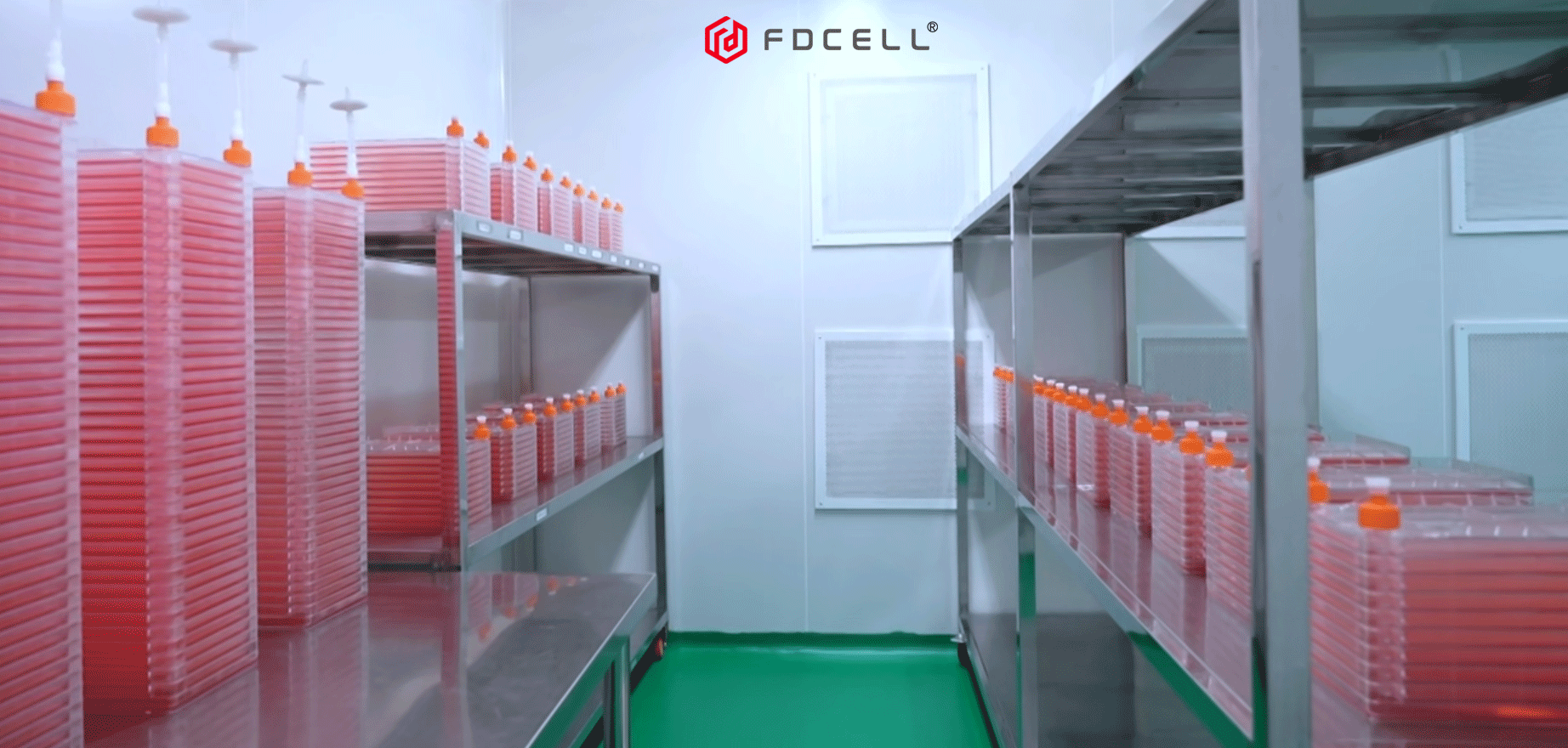
Advantages of Multi-Layer Cell Culture Systems in Vaccine Production
4. Closed-System Configuration
Reducing unnecessary open handling is becoming increasingly important in many cell culture workflows.System integrity is also an important consideration in closed processing. Learn more in Why Leak Testing Matters for Closed System Cell Factory.
An OEM project can therefore focus on creating a more integrated closed Cell Factory system, combining the Cell Factory with preassembled tubing, connectors, filters, and collection components.
Rather than configuring each component separately during use, a customized assembly can simplify preparation and reduce repeated manual connections.
The exact configuration depends on the customer's process, including:
Media addition
Cell inoculation
Culture transfer
Sampling
Harvesting
Multi-unit connection
5. Packaging and Labeling
OEM customization is not limited to the product itself.
For distributors, private-label customers, and biopharmaceutical companies, packaging and labeling may also need to follow specific requirements.
Options may include:
Customized labels
Customer logo
Product coding
Outer carton design
Packaging quantity
Batch information
Private-label packaging
OEM documentation
Clear labeling and batch identification are especially important for customers managing multiple product specifications or production sites.
6. Documentation Support
For regulated or quality-sensitive applications, documentation is often part of the supplier evaluation process.
An experienced Cell Factory manufacturer should be able to support customers with relevant product and quality documentation according to project requirements.
Depending on the product and application, documentation may include product specifications, sterilization information, material information, batch records, quality certificates, and other technical documents.
OEM customers may also require customized product specifications or documentation formats for their internal qualification process.
7. Customization Starts With the Application
Not every project requires extensive customization.
In many cases, the most practical OEM solution is based on a standard multilayer Cell Factory combined with customized tubing, connectors, packaging, or labeling.
Before starting an OEM Cell Factory project, it is helpful to confirm:
Cell type
Required culture scale
Cell Factory layer number
Media transfer method
Inlet and outlet requirements
Tubing configuration
Connector type
Sterility requirements
Packaging requirements
Expected order volume
These details help the manufacturer determine whether a standard configuration is sufficient or whether a customized solution is needed.
OEM Cell Factory Solutions From FDCELL
FDCELL provides 1-, 2-, 5-, 10-, and 40-layer Cell Factories, together with customizable tubing assemblies and connection solutions.
For OEM and ODM projects, customization can cover Cell Factory specifications, tubing systems, connectors, labeling, packaging, and other application-specific requirements.
Whether the project involves a single Cell Factory or a multi-unit closed transfer system, the configuration can be developed around the customer's cell culture process and scale-up needs.










