Cell line establishment is a foundational step in many areas of life science research and biopharmaceutical development. Whether deriving stable cell lines or expanding primary cells, creating a controlled and reproducible culture environment is essential. Among the commonly used tools, the Cell Culture Flask remains a standard platform for early-stage cell line development.
A well-designed cell flask provides the conditions necessary for cell attachment, growth, and stabilization, supporting successful establishment and long-term maintenance of cell lines.
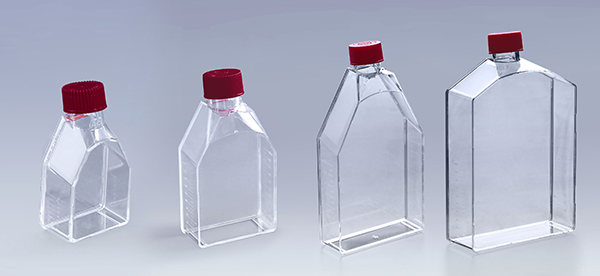
Why Cell Culture Flask Is Used in Early Cell Line Development
During cell line establishment, cells are often sensitive to environmental changes and require stable culture conditions. The Cell Culture Flask offers a controlled surface for adherent growth, making it suitable for:
Initial cell recovery after isolation or thawing
Early-stage expansion of primary or transfected cells
Screening and selection of stable clones
Compared to larger-scale systems, a cell flask allows researchers to closely monitor cell behavior and make precise adjustments during critical early stages.
Key Factors for Successful Cell Line Establishment
Establishing a reliable cell line involves careful control of multiple parameters. The performance of the Cell Culture Flask plays an important role in supporting these conditions.
Surface Quality and Cell Attachment
Cell attachment is the first step in cell line establishment. A Cell Culture Flask with uniform surface treatment promotes consistent cell adhesion, reducing variability between experiments.
Stable attachment helps:
Improve cell survival after seeding
Support uniform cell spreading
Enhance overall culture stability
Seeding Density and Growth Control
Selecting the appropriate seeding density is essential when working with a cell flask. During early establishment, cells should have enough space to grow while maintaining sufficient cell-to-cell interaction.
Proper seeding density helps:
Avoid slow growth due to low cell numbers
Prevent early overconfluency
Maintain healthy cell morphology
Medium Conditions and Nutrient Balance
The culture medium must provide sufficient nutrients while maintaining stable pH and osmotic conditions. In a Cell Culture Flask, medium volume and distribution affect nutrient availability across the growth surface.
Key considerations include:
Using appropriate medium volume for the flask size
Ensuring even distribution after seeding
Replacing medium at appropriate intervals
Monitoring and Selection of Cell Clones
During cell line establishment, continuous monitoring is required to identify stable and healthy cell populations. A clear and well-constructed cell flask allows for easy microscopic observation.
Researchers can:
Evaluate cell morphology and growth patterns
Identify and select promising clones
Remove unwanted or non-viable cells
Consistent flask quality ensures reliable observation and handling during this process.
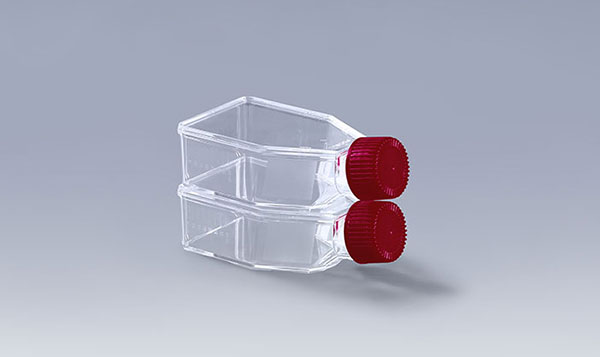
Recommended Medium Volumes for Cell Culture Flasks
Advantages of Using Cell Culture Flask
The Cell Culture Flask offers several advantages for cell line establishment compared to other culture systems:
Controlled environment for sensitive cells
Ease of handling and observation
Scalable formats (T25, T75, T175, T225) for gradual expansion
Compatibility with standard laboratory workflows
These features make the cell flask a practical choice for transitioning from initial cell isolation to stable cell line development.
Supporting Scale-Up from Flask to Production
Data generated during cell line establishment in a Cell Culture Flask often serve as the foundation for later scale-up. Consistent growth behavior observed in early stages helps guide process development.
Using reliable and consistent cell flask products allows researchers to:
Maintain reproducibility across passages
Generate comparable data for scale-up decisions
Reduce variability when transitioning to larger systems

Conclusion
The Cell Culture Flask plays a critical role in cell line establishment by providing a stable and controlled environment for early-stage cell growth. From initial cell attachment to clone selection and expansion, the performance of the cell flask directly impacts the success of the process.
By selecting high-quality Cell Culture Flask products and optimizing culture conditions, researchers can improve the efficiency and reliability of cell line development, laying a strong foundation for downstream applications.










