Stable rotation is essential for roller bottles used in adherent cell culture, virus propagation, and vaccine manufacturing. During operation, each bottle should remain in continuous and consistent contact with the roller apparatus.
If a bottle slips, stops intermittently, moves sideways, or rotates at a different rate from neighboring bottles, the culture environment may become less consistent. Medium distribution can change, and cells may experience different attachment or growth conditions.
Bottle slipping is not always caused by the roller bottle itself. The bottle, roller apparatus, loading conditions, and operating parameters should all be checked systematically.
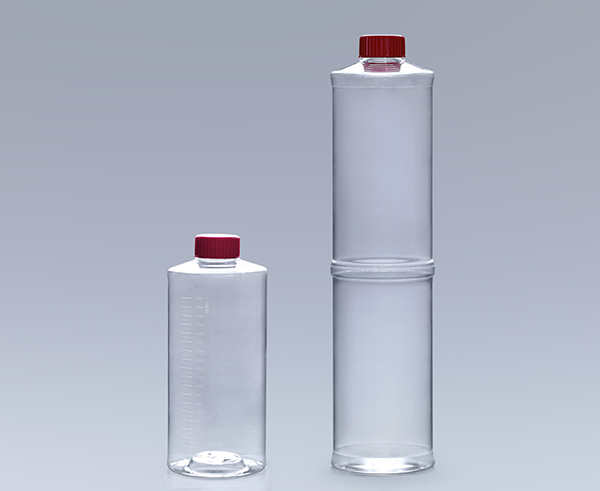
Cell Culture Roller Bottle
1. Check Whether the Roller Apparatus Is Level
A roller apparatus that is not installed level can cause bottles to gradually move toward one side during operation.
This may result in:
Sideways bottle movement
Uneven contact with the rollers
Irregular rotation
Bottles rubbing against equipment components
Before troubleshooting the bottle itself, confirm that the apparatus and individual roller positions are level.
This is especially important after equipment relocation, maintenance, or changes in rack configuration.
2. Inspect the Roller Surfaces
Roller surfaces provide the friction required to rotate the bottle.
Over time, dust, culture medium residue, disinfectant deposits, or normal wear can reduce friction between the roller and bottle.
When slipping occurs, inspect the rollers for:
Liquid or chemical residue
Dust or contamination
Worn surfaces
Cracks or damage
Uneven surface condition
Cleaning should follow the equipment manufacturer's recommended procedure. Using unsuitable cleaning agents may change the roller surface and create additional problems.
If only one position repeatedly causes slipping while the same bottle operates normally elsewhere, the apparatus position should be investigated first.
3. Check Roller Spacing
The distance between rollers must allow the bottle to sit securely while maintaining sufficient contact for stable rotation.
If the spacing is too wide, the bottle may sit too deeply or contact the rollers incorrectly. If the spacing is too narrow, excessive pressure or unstable positioning may occur.
This becomes particularly important when switching between different roller bottle sizes.
A roller apparatus that operates well with one bottle format should not automatically be assumed to be optimized for another.
When moving from 2L to 5L roller bottles, equipment compatibility and bottle positioning should therefore be confirmed before routine production.
4. Bottle Diameter and Roundness Matter
A roller bottle functions as part of a mechanical system. Its external geometry affects how it contacts the rotating rollers.
Important parameters include:
Outer diameter
Bottle roundness
Straightness
Wall stability
Dimensional consistency between bottles
If the bottle is significantly out of round, contact with the rollers may change continuously during rotation. This can produce jumping, vibration, intermittent slipping, or inconsistent rotational speed.
For production-scale roller bottle culture, dimensional consistency between batches is therefore more than an appearance issue—it can affect equipment compatibility.
5. Review the Working Volume
The amount of medium inside the bottle changes its total operating weight and the way liquid moves during rotation.
If the working volume changes significantly from the validated process, rotation behavior may also change.
A heavier bottle may interact differently with the roller surface, while changing liquid movement inside the bottle can alter its rotational behavior.
This is why roller speed and medium volume should be evaluated together when establishing or transferring a roller bottle process.
If slipping begins after changing the working volume, compare the current conditions with the previously stable process before adjusting the equipment.
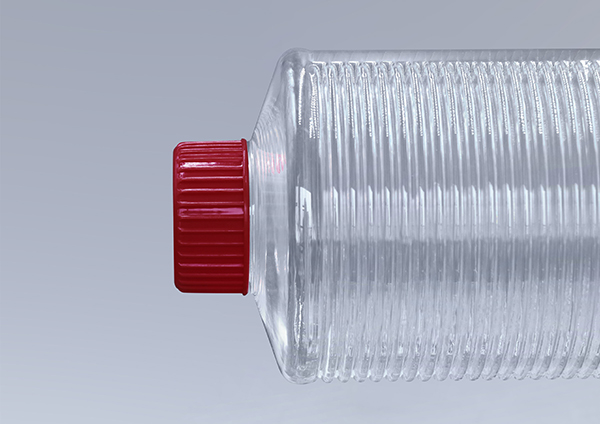
Expanded Surface Polystyrene Roller Bottle
6. Check Bottle Loading and Position
Sometimes the cause is simply inconsistent loading.
Before starting the apparatus, make sure each bottle:
Is positioned correctly on the rollers
Makes stable contact with both supporting surfaces
Is not touching neighboring bottles
Has sufficient clearance around the neck and base
Does not move sideways immediately after startup
After loading, observe several complete rotations rather than assuming that every bottle is running correctly.
This simple check can identify problems before the culture run continues for several hours.
7. Look for Deformation During Long-Term Rotation
A bottle may appear normal when empty but behave differently after filling and prolonged incubation.
Temperature, liquid weight, bottle construction, and long-term mechanical loading can affect structural stability.
If slipping develops only after extended culture, check whether the bottle shows:
Local deformation
Changes in roundness
Uneven bottle walls
Base deformation
Abnormal contact with the rollers
Comparison with an unused bottle from the same batch may help identify visible changes.
For longer vaccine-production processes, rotation stability should be evaluated across the full intended culture period rather than only during initial qualification.
8. Do Not Assume the Bottle Is the Problem
If slipping occurs, replacing the bottle immediately may not identify the true cause.
A more useful troubleshooting sequence is:
Identify which bottle and roller position are affected.
Move the same bottle to another roller position.
Test another bottle in the original position.
Check equipment level and roller cleanliness.
Confirm roller spacing.
Review working volume and loading conditions.
Inspect bottle dimensions and deformation.
Compare multiple bottles from the same production lot.
This helps separate bottle-related variation from equipment-related problems.
For example, if several different bottles slip only at the same equipment position, the roller apparatus is more likely to require attention.
If one bottle behaves abnormally across several positions while other bottles rotate normally, the bottle itself deserves further investigation.
9. Why Rotation Stability Matters for Cell Culture
Slipping is not only a mechanical inconvenience.
Stable rotation affects how culture medium repeatedly moves over the adherent cell layer. If a bottle stops or rotates inconsistently, cells may experience different liquid exposure conditions from those in the rest of the production batch.
This can contribute to:
Uneven cell attachment
Non-uniform monolayer development
Local differences in nutrient exposure
Increased cell detachment
Bottle-to-bottle culture variation
For vaccine manufacturing using multiple roller bottles, consistent rotation therefore becomes part of maintaining reproducible process conditions.
Include Rotation Stability in Supplier Qualification
When evaluating new cell culture roller bottles, users should not assess only cell growth and TC surface performance.
Equipment compatibility should also be tested.
Qualification can include:
Bottle dimensions
Roundness
Rotation stability
Slipping tendency
Performance at the intended working volume
Compatibility with existing roller apparatus
Long-term rotation performance
Lot-to-lot consistency
Testing should use the customer's actual equipment whenever possible.
A roller bottle that performs well on one apparatus may interact differently with another system because roller spacing, materials, dimensions, and operating conditions can vary.
Stable Rotation Requires Both Product and Equipment Control
Reliable roller bottle operation depends on the interaction between the vessel and the roller apparatus.
When slipping occurs, users should evaluate the equipment level, roller condition, spacing, bottle geometry, working volume, loading position, and long-term structural stability before identifying the root cause.
FDCELL provides roller bottles in 2 L and 5 L formats for adherent cell expansion, virus propagation, vaccine manufacturing, and other biopharmaceutical applications.
For customers introducing a new bottle into an established culture process, rotation stability and equipment compatibility should be evaluated together with cell attachment, growth performance, and batch consistency.










